EV Charging Cost vs Petrol Expense in India: Which Is More Economical for Daily Travel?
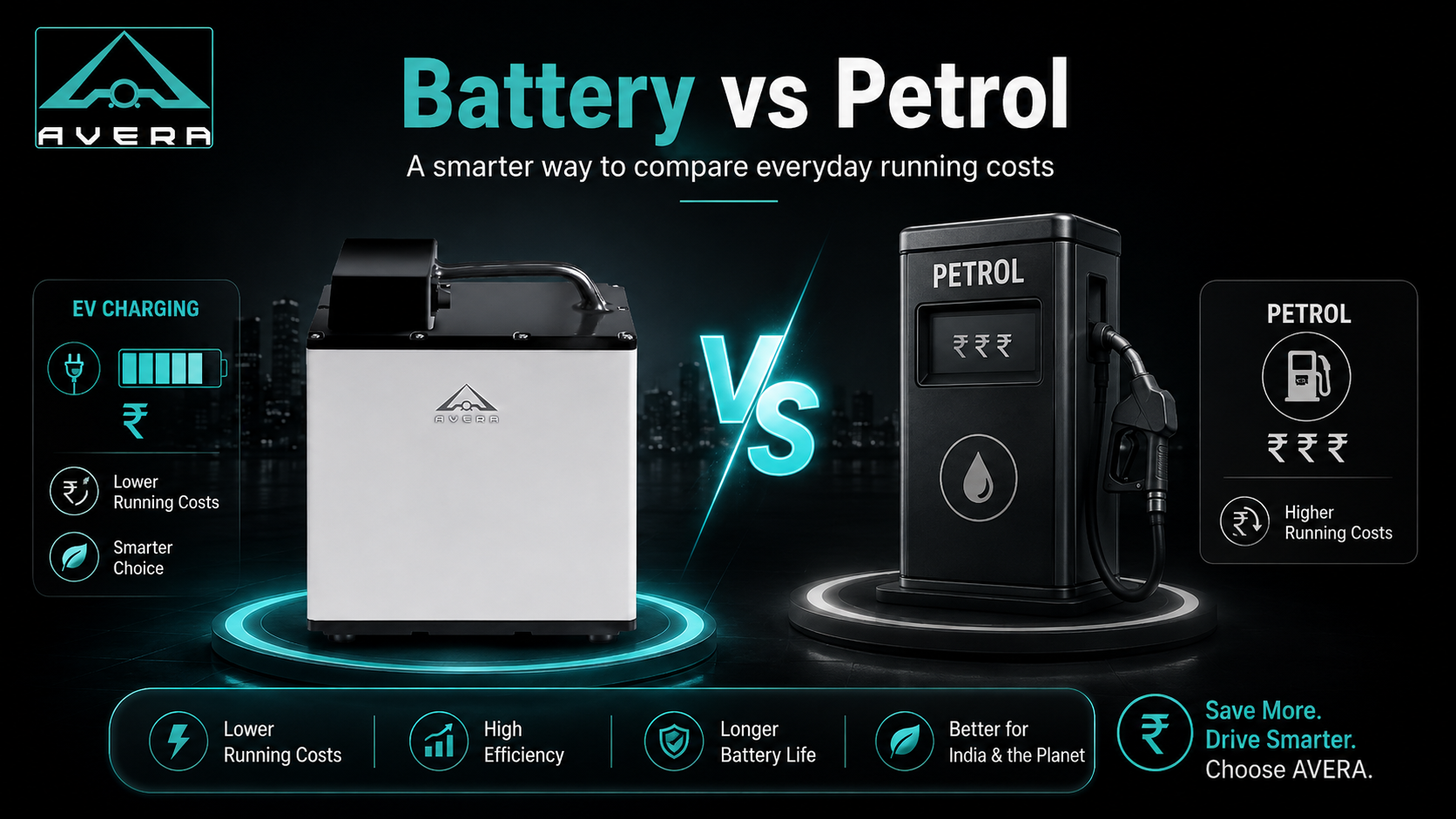
For many Indian two-wheeler buyers, one of the biggest questions when considering an electric scooter is simple: will charging an EV actually cost less than filling a petrol scooter? The answer depends on how much you travel, local electricity and petrol prices, the efficiency of the vehicle, charging habits and your overall ownership pattern.
Do not compare only the purchase price of an electric scooter and a petrol scooter. Calculate what each vehicle may cost to operate over the distance you actually travel.
Why Compare EV Charging Cost With Petrol Expense?
A scooter is not purchased only for the day it leaves the showroom. It may be used for commuting to work, college, business locations, shopping and other everyday journeys for several years.
Because of this, the initial purchase price is only one part of the financial decision. AVERA's electric scooter buying guidance recommends looking at total cost of ownership, including energy, routine maintenance, insurance, financing, tyres, battery warranty and resale considerations.
When comparing an electric scooter with a petrol scooter, energy cost is one of the easiest ownership expenses to understand because it is directly connected to the kilometres you travel.
1. How EV Charging Cost Works
An electric scooter uses electricity stored in its battery instead of petrol. Therefore, its energy expense is determined mainly by how much electricity is required to charge the battery and the electricity tariff applicable where the scooter is charged.
A simple way to understand your charging expense is:
Charging Cost = Electricity Consumed × Electricity Rate
Your actual result will depend on battery capacity, charging losses, electricity tariff and how frequently you charge.
Rather than relying on a generic savings figure, calculate the cost using your own electricity tariff and expected travel distance. This follows the approach recommended in the AVERA source material.
2. How Petrol Scooter Running Expense Works
A petrol scooter's fuel expense is influenced by the number of kilometres travelled, its real-world fuel efficiency and the petrol price in your city.
Petrol Cost = Distance Travelled ÷ Real-World Mileage × Petrol Price
Use realistic mileage rather than assuming that laboratory or advertised figures will exactly match your daily riding conditions.
Fuel efficiency can vary with traffic, riding speed, road conditions, load, tyre pressure and riding style. That is why your actual petrol expense may be different from another rider using a similar scooter.
3. Daily Kilometres Can Change the Financial Picture
How far you travel every day is one of the most important factors in an EV-versus-petrol calculation.
AVERA recommends that buyers begin by estimating their average daily kilometres, the number of days they ride each week, whether they frequently carry a passenger, the roads they use and where the vehicle will be charged.
For example, a rider commuting every weekday may accumulate significantly more annual kilometres than someone who uses a scooter only occasionally. The more kilometres a vehicle covers, the more important its per-kilometre operating expense becomes.
| Usage Factor | Electric Scooter | Petrol Scooter |
|---|---|---|
| Energy Source | Electricity | Petrol |
| Main Cost Variable | Electricity tariff and energy consumption | Fuel price and real-world mileage |
| Daily Distance | Higher usage increases electricity consumption | Higher usage increases petrol consumption |
| Cost Calculation | Based on electricity consumed | Based on litres of petrol consumed |
| Best Comparison | Calculate annual running cost using your actual kilometres and local prices. | |
4. Calculate Your Monthly Travel First
Before comparing charging and petrol expenses, calculate approximately how many kilometres you travel each month.
Suppose your workplace is 15 kilometres from home. A round trip would be about 30 kilometres. If you make that journey 25 days a month, your work commute alone would be:
You should then add shopping trips, weekend journeys and other regular travel. This gives you a more realistic monthly distance that can be used for both EV and petrol calculations.
5. An Illustrative EV Charging Calculation
Consider an electric scooter with an example battery capacity of 3 kWh. If a full charge requires approximately that amount of usable energy before accounting for real-world charging losses, you can multiply the electricity consumed by your local tariff.
Illustrative Example Only
Battery energy: 3 kWh
Example electricity rate: ₹8 per kWh
Basic energy calculation: 3 × ₹8 = ₹24
This is only an illustration, not an AVERA product-cost claim. Actual charging cost depends on the vehicle, usable battery capacity, charging losses and your applicable electricity tariff.
Once you know approximately how much distance the scooter delivers under your normal conditions, you can estimate a practical energy cost per kilometre.
6. An Illustrative Petrol Expense Calculation
The same principle applies to a petrol scooter. Instead of electricity consumption, calculate how many litres of petrol are required to cover your monthly distance.
Example Formula
Monthly travel: 750 km
Example real-world mileage: 45 km/litre
Fuel required: 750 ÷ 45 = approximately 16.7 litres
Multiply the litres required by the current petrol price in your city to estimate the monthly fuel expense.
Mileage is illustrative. Actual fuel economy varies by scooter, road, traffic, load and riding style.
7. Why Local Electricity and Petrol Prices Matter
There is no single EV charging cost or petrol expense that applies to every person in India.
Electricity tariffs can differ by State, distribution company, consumption slab and charging arrangement. Petrol prices also vary by location and can change over time.
This is why AVERA's source content recommends calculating the comparison using your own kilometres and local prices rather than relying on a generic savings statement.
Use today's applicable electricity tariff and petrol price in your location when calculating expected running cost. Update the calculation if prices change.
8. Home Charging Can Make Daily EV Use More Convenient
Cost is only one side of charging. Convenience also matters.
Before purchasing an electric scooter, AVERA recommends identifying where the scooter will normally be charged, whether the electrical connection is appropriate, how long charging takes and what alternative charging arrangements are available if your routine changes.
For someone with predictable daily travel and convenient charging at home or work, an electric scooter can be particularly practical.
Apartment residents should check permissions, electrical access, metering and safe charging arrangements before taking delivery of the vehicle.
9. Running Cost Is Not the Same as Total Ownership Cost
Even when EV charging expense appears attractive compared with petrol expense, charging or fuel should not be the only number used to make a purchase decision.
A more complete ownership comparison can include:
Compare the complete on-road cost rather than only the advertised price.
Calculate electricity or petrol expense using your actual usage.
Consider expected routine maintenance over your ownership period.
Include applicable insurance costs in the comparison.
Compare the effective financing cost, not only the monthly EMI.
Understand battery and vehicle warranty terms before booking.
10. Maintenance Can Affect the Long-Term Comparison
The energy bill is highly visible because it is paid regularly, but routine maintenance should also be considered when comparing vehicles.
AVERA's guide specifically includes expected maintenance as part of total cost of ownership. The exact maintenance requirement depends on the individual vehicle, component condition, riding environment, servicing schedule and manufacturer recommendations.
Buyers should therefore ask the authorised dealer about service intervals, service availability, consumable parts and expected ownership requirements instead of assuming that running cost is determined by energy alone.
11. Battery Warranty Should Be Part of Your EV Cost Calculation
Battery technology is a major component of an electric scooter. When evaluating long-term cost, understand the battery chemistry, Battery Management System, warranty period, applicable warranty conditions and manufacturer service support.
AVERA identifies battery engineering as part of its electric mobility ecosystem and highlights in-house LFP battery-pack assembly capabilities. Its source material notes that LFP is valued for safety characteristics and cycle-life potential, while also emphasizing that actual battery performance depends on complete pack design, cells, BMS, thermal management, charging strategy and vehicle integration.
12. Do Not Forget Financing
An attractive monthly EMI can make a scooter appear inexpensive, but EMI alone does not reveal the complete financing cost.
Compare the loan amount, interest, processing charges, tenure and total amount payable. AVERA's buyer checklist recommends comparing financing cost rather than focusing only on the monthly EMI.
This becomes especially important when comparing two vehicles with different purchase prices.
13. Government EV Incentives Can Influence Purchase Cost
Incentives can affect the purchase economics of an electric scooter, but they should not be treated as a permanent or guaranteed discount.
Eligibility depends on the applicable government scheme, vehicle category, model eligibility, certification, registration timing and other conditions.
The AVERA guide recommends checking the official Ministry of Heavy Industries information and confirming applicable benefits with an authorised dealer before making payment.
State-level EV policies should also be checked separately because local benefits and conditions may differ.
14. EV vs Petrol: Build Your Own Cost Comparison
Instead of depending on a national average, create your own comparison using the following information:
- Calculate your average daily kilometres.
- Estimate your total monthly and annual kilometres.
- Check your local electricity tariff.
- Check the current petrol price in your area.
- Use realistic EV energy consumption or usable range.
- Use realistic petrol scooter mileage.
- Calculate annual charging and petrol costs.
- Add expected maintenance costs.
- Include insurance and financing.
- Consider warranty and your planned ownership period.
When Can an Electric Scooter Make Practical Sense?
Electric scooters can be particularly relevant for predictable short- and medium-distance urban commuting.
A buyer who knows how many kilometres they travel, has convenient charging access and selects a scooter suited to their real usage can make a much more informed comparison between electricity and petrol expenses.
Buyers with longer or irregular routes should also pay close attention to real-world range, charging time, service availability and available charging infrastructure.
Choosing an AVERA Electric Scooter
AVERA's product portfolio is positioned around different urban mobility requirements. According to the supplied material, the appropriate model should be selected based on intended use, performance expectations, range requirement, budget and preferred features.
AVERA VINCERO is positioned for customers seeking a more performance-oriented electric two-wheeler experience. AVERA RETROSA is designed around a distinctive premium urban scooter proposition, while RETROSA Lite e is positioned as an accessible option for customers entering electric mobility.
Specifications, prices, offers and availability can change, so buyers should always check current official AVERA product information and consult an authorised dealer before making a final decision.
Frequently Asked Questions
Is charging an electric scooter cheaper than buying petrol?
The answer depends on the scooter's energy consumption, your electricity tariff, the petrol scooter's fuel efficiency, local petrol prices and how many kilometres you travel. Calculate both using your own usage rather than relying on a generic claim.
How can I calculate electric scooter charging cost?
Multiply the electricity consumed during charging by your applicable electricity rate. For a more accurate ownership estimate, account for actual charging behaviour and charging losses.
How do I calculate petrol expense per month?
Divide your monthly kilometres by the scooter's realistic fuel mileage to estimate the litres required, then multiply those litres by the current local petrol price.
Does daily travel distance affect EV savings?
Yes. Daily and annual kilometres directly affect energy or fuel consumption, so your usage pattern is a key part of any cost comparison.
Is home charging important when buying an electric scooter?
Convenient charging can significantly improve ownership practicality. Before buying, confirm where you will charge, whether the electrical arrangement is suitable and how charging fits into your daily routine.
Should I compare only electricity and petrol expenses?
No. A complete comparison should also consider purchase price, maintenance, insurance, financing, tyres, battery warranty and other ownership costs.
Do government incentives reduce electric scooter cost?
They may, when the vehicle and buyer meet the applicable eligibility conditions. Incentives can change, so current eligibility should be verified through official sources and the authorised dealer.
Is a higher-priced EV always more expensive to own?
Not necessarily. Purchase price is only one component of total cost of ownership. Energy, maintenance, financing, warranty, usability and other costs should also be considered over the period you expect to own the scooter.
Final Thoughts: Compare Cost Using Your Own Commute
EV charging cost versus petrol expense in India cannot be reduced to one universal number. Electricity rates, petrol prices, daily kilometres, vehicle efficiency and individual usage patterns all influence the answer.
The most useful approach is to calculate your annual energy cost for an electric scooter and compare it with the annual fuel expense of a suitable petrol scooter. Then include maintenance, insurance, financing, tyres, warranty and other ownership considerations.
This reflects AVERA's broader recommendation: buyers should calculate costs using their own kilometres and local prices rather than relying on generic savings claims.
Ultimately, a smart vehicle purchase is one where the product fits your travel requirements, charging arrangement and budget while making sense over the period you intend to own it.
About AVERA
AVERA is an electric two-wheeler manufacturer from Andhra Pradesh, India, focused on sustainable mobility, engineering and product development. The company is developing capabilities across electric vehicle manufacturing, battery-pack integration and R&D with an ambition to build globally competitive mobility solutions from India.