AVERA | Mobility Insights
How to Choose the Right Electric Scooter in India: 7 Things Every Buyer Should Check
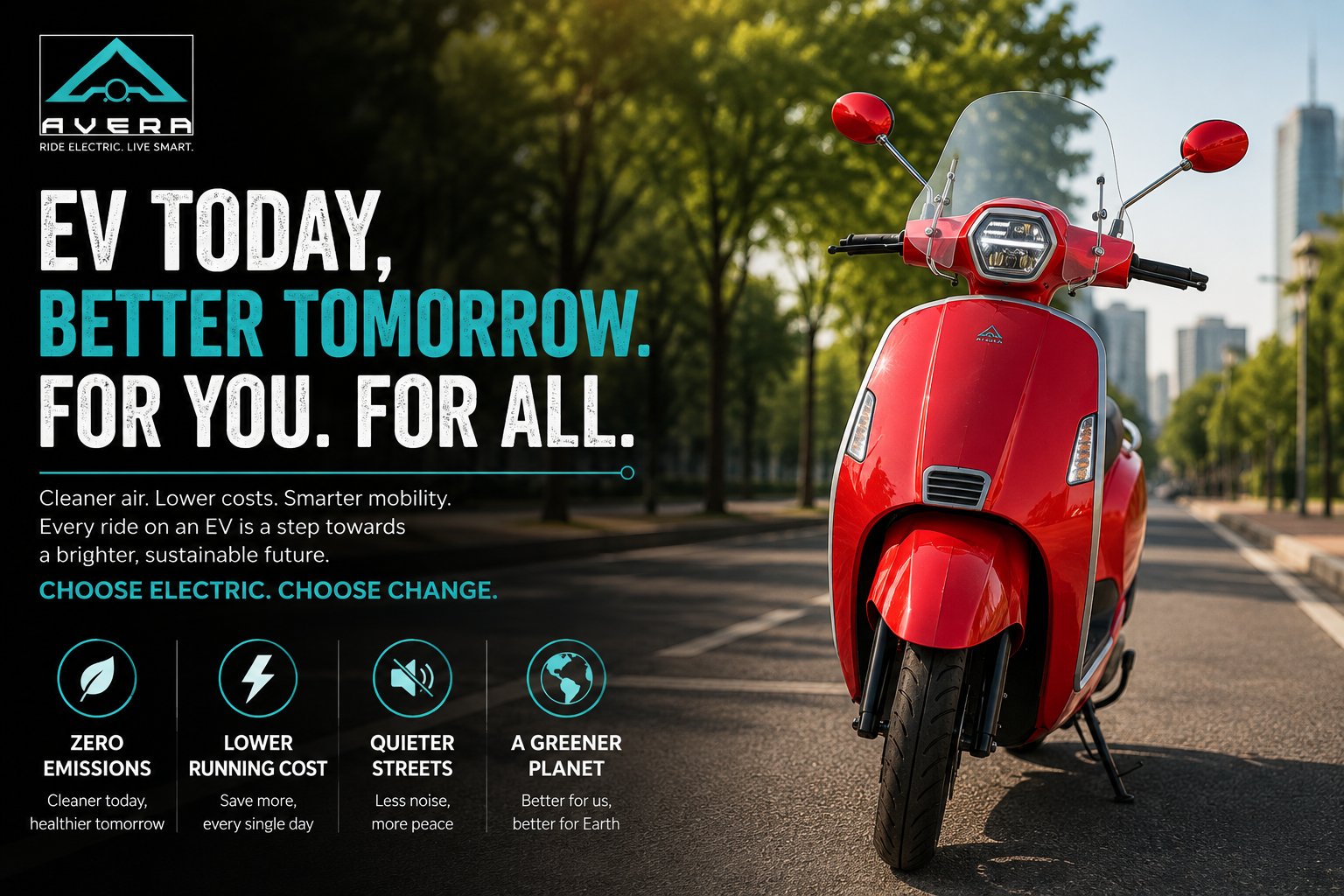
A practical electric scooter buying guide covering daily travel, battery technology, charging, total cost of ownership, incentives, service support and smart model selection.
Choosing the right electric scooter is not only about comparing price or advertised range. A smart buying decision should consider how the scooter fits your daily commute, where it will be charged, what battery technology it uses, what warranty applies and whether reliable service support is available.
Why Choosing the Right Electric Scooter Matters
For many Indian families, a two-wheeler is an everyday necessity. It may be used for commuting to work, travelling to college, visiting nearby markets, completing household errands or managing short and medium-distance travel. Because of this, buying an electric scooter should be treated as a practical mobility decision rather than simply a lifestyle purchase.
Electric two-wheelers can offer a quiet riding experience, instant motor response and the potential for lower routine energy and maintenance costs compared with conventional petrol scooters. However, the actual value of an electric scooter depends on several factors, including daily usage, local electricity and fuel prices, charging availability, service support and the individual product.
This is why the best electric scooter is not necessarily the one with the lowest purchase price or the longest headline range. The right scooter is the one that matches your actual travel pattern, charging arrangement, ownership budget and performance expectations.
1. Start With Your Daily Travel Pattern
Before comparing electric scooter models, understand your own commute. Start by estimating how many kilometres you normally travel every day and how many days a week you use your two-wheeler.
Also consider whether you regularly carry a passenger, what kind of roads you use, how much stop-and-go traffic you experience and whether your journeys are generally predictable or irregular.
Buyers travelling predictable urban distances and having convenient charging access at home or work may find an electric scooter particularly practical. On the other hand, riders with longer or irregular travel requirements should pay closer attention to real-world range, charging time, service availability and charging infrastructure along their routes.
Questions to Ask About Your Commute
- How many kilometres do I travel every day?
- Do I regularly ride with a passenger?
- Are my journeys mostly short city trips?
- Do I have predictable travel patterns?
- Where will I normally charge the scooter?
2. Look Beyond Range and Understand the Battery
Battery technology is one of the most important parts of an electric scooter. Many buyers look only at the advertised range, but battery evaluation should go much deeper.
Buyers should understand battery chemistry, usable capacity, thermal and electrical protection, Battery Management System functionality, warranty coverage, expected operating conditions and manufacturer support.
AVERA has developed in-house LFP battery-pack assembly capabilities as part of its electric mobility ecosystem. LFP, or lithium iron phosphate, is widely valued for its safety characteristics and cycle-life potential.
Battery chemistry, however, is only one part of the picture. Battery performance also depends on the complete pack design, the cells used, Battery Management System, thermal management, charging strategy and vehicle integration.
Why the Battery Management System Matters
The Battery Management System, commonly known as the BMS, is an important part of an electric scooter battery system. Buyers should understand how the BMS works with the battery pack instead of judging the scooter only by a single battery-capacity number.
Buyer Tip: Ask about battery chemistry, BMS functionality, charging requirements and warranty before booking an electric scooter.
3. Calculate the Total Cost of Ownership
The showroom price is only the first number in the ownership journey. A better electric scooter comparison should consider the complete cost of owning and using the vehicle over time.
Important costs include electricity, routine maintenance, insurance, financing, tyres, expected battery warranty and possible resale considerations over the period you plan to keep the vehicle.
One practical approach is to estimate your annual kilometres and compare the expected annual energy cost of an electric scooter with the fuel cost of a comparable petrol scooter. Then consider expected maintenance and financing differences.
The result will vary according to usage, electricity prices and fuel prices. That is why buyers should calculate costs using their own travel distance rather than depending entirely on generic savings claims.
| Ownership Factor | What to Check |
|---|---|
| Purchase Price | Compare complete on-road cost, not only ex-showroom price. |
| Energy Cost | Estimate electricity expense using your actual annual travel. |
| Maintenance | Understand routine service requirements. |
| Financing | Compare total financing cost, not just EMI. |
| Warranty | Read battery and vehicle warranty terms carefully. |
4. Check Charging Before You Buy
Charging convenience can make a major difference to the ownership experience. Before booking an electric scooter, identify where you will normally charge it and whether the available electrical connection is suitable.
Buyers should also understand how long a full charge takes and what charging alternatives may be available if their daily routine changes.
This becomes especially important for apartment residents and people using shared parking facilities. Permissions, electrical access, metering and safe charging arrangements should ideally be understood before the vehicle is delivered.
A scooter may look attractive in the showroom, but if charging it every day is inconvenient, the ownership experience may become difficult. Charging should therefore be considered before purchase, not after.
5. Compare the Complete Vehicle, Not Just the Battery
A good electric scooter is an integrated system. Battery technology is important, but the quality of the complete vehicle matters just as much.
Buyers should examine the motor and controller, braking system, tyres, suspension, lighting, software and instrumentation, safety systems, ergonomics, build quality, service network and spare-parts availability.
A lower purchase price does not automatically mean lower ownership cost. If the scooter does not suit your travel requirements or if service support is inconvenient, the initial saving may not provide better long-term value.
Similarly, a higher initial price can sometimes be justified if the scooter provides better usability, durability, warranty protection or technology for its intended application.
6. Understand Government EV Incentives Correctly
Government EV incentives can influence the purchase decision, but buyers should never assume that an incentive is a permanent discount.
Eligibility can depend on the applicable scheme, vehicle category, certification requirements, registration period, model eligibility and other conditions.
Government of India data under the PM E-DRIVE programme reflects more than 23 lakh electric two-wheelers registered under the scheme in its August 2026 dashboard. The programme has also been extended to 31 March 2028 for most supported segments, although applicable dates and eligibility for specific vehicle categories should always be checked before purchase.
Buyers should also separately check State and local EV policies. Final eligibility and applicable benefits should be confirmed before making payment.
7. Check Service Support, Warranty and Spare Parts
After-sales support is an important part of the ownership experience. A scooter should not be judged only by how it performs during a test ride.
Buyers should check service coverage in their area, understand spare-parts availability and carefully read both vehicle and battery warranty terms.
Dependable service support becomes especially important over long-term ownership. Before booking, customers should know where the scooter can be serviced and what support is available if a vehicle or battery-related issue requires inspection.
Choosing the Right AVERA Electric Scooter
AVERA's product portfolio is designed around different urban mobility needs. The right model should be selected according to the buyer's intended use, performance expectations, range requirement, budget and preferred features.
AVERA VINCERO
Positioned for customers seeking a more performance-oriented electric two-wheeler experience.
AVERA RETROSA
Designed around a distinctive premium urban-scooter proposition.
RETROSA Lite e
Positioned as an accessible option for customers entering electric mobility.
Exact specifications, pricing, offers and availability can change according to model, market and period. Buyers should refer to the latest official AVERA information and an authorised dealer before making a final decision.
Electric Scooter Buyer Checklist
- Calculate your average daily kilometres.
- Confirm where and how you will charge the scooter.
- Compare usable range for your real riding conditions.
- Understand battery chemistry, BMS and warranty.
- Check the complete on-road price.
- Compare total financing cost instead of only EMI.
- Verify current government and State incentive eligibility.
- Check service coverage and spare-parts availability.
- Take a proper test ride.
- Read all warranty and ownership terms before booking.
Frequently Asked Questions
What is the most important thing to check before buying an electric scooter?
Start with your daily travel requirement. Then compare battery technology, real-world range, charging access, warranty, service support and total ownership cost.
Should I choose an electric scooter only by its range?
No. Range is important, but buyers should also understand battery chemistry, BMS functionality, charging requirements, vehicle quality, service support and warranty.
Why is charging access important?
Charging convenience directly affects everyday ownership. Buyers should know where the scooter will be charged and whether the electrical arrangement is suitable before purchase.
Is a lower-priced electric scooter always the better choice?
Not necessarily. A lower purchase price may not provide better ownership value if the vehicle does not suit your use or if service support is inconvenient.
Should I check EV incentives before booking?
Yes. EV incentives can change and may depend on model eligibility, registration conditions and scheme rules. Current benefits should always be verified before payment.
Why should I take a test ride?
A test ride helps you evaluate comfort, ergonomics, acceleration, braking, suspension and whether the scooter feels suitable for your normal riding conditions.
Final Thoughts
Choosing the right electric scooter in India requires more than looking at a price tag or one headline specification. The best decision begins with understanding your own travel requirements.
Daily kilometres, charging access, battery chemistry, BMS functionality, total ownership cost, warranty, service support and government incentive eligibility should all be considered before booking.
Electric mobility is increasingly becoming a practical choice for Indian consumers. As battery technology, charging infrastructure, manufacturing and service ecosystems continue to develop, electric two-wheelers can play an important role in creating cleaner and more efficient urban mobility.
At AVERA, the focus is on contributing to this transition through Indian engineering, manufacturing, battery-pack integration and continuous product development. A smarter EV purchase starts with informed comparison and a vehicle that genuinely fits the rider's everyday needs.
About AVERA
AVERA is an electric two-wheeler manufacturer from Andhra Pradesh, India, focused on sustainable mobility, engineering and product development. The company is building capabilities across electric vehicle manufacturing, battery-pack integration and R&D.
Editorial Note: Product specifications, pricing, incentives, financing programmes and promotional offers may change. Buyers should verify current product details, warranty, eligibility, pricing and incentives with AVERA or an authorised dealer before purchase.