Electric Scooter Range in Winter: What Indian EV Riders Should Know
Electric scooter range is influenced by several real-world factors, including daily kilometres, road conditions, passenger load, charging habits and operating environment. During winter, riders may notice that everyday range and battery behaviour can feel different from warmer conditions. Understanding these changes can help electric scooter owners plan charging more effectively and choose a vehicle that suits their actual commute.
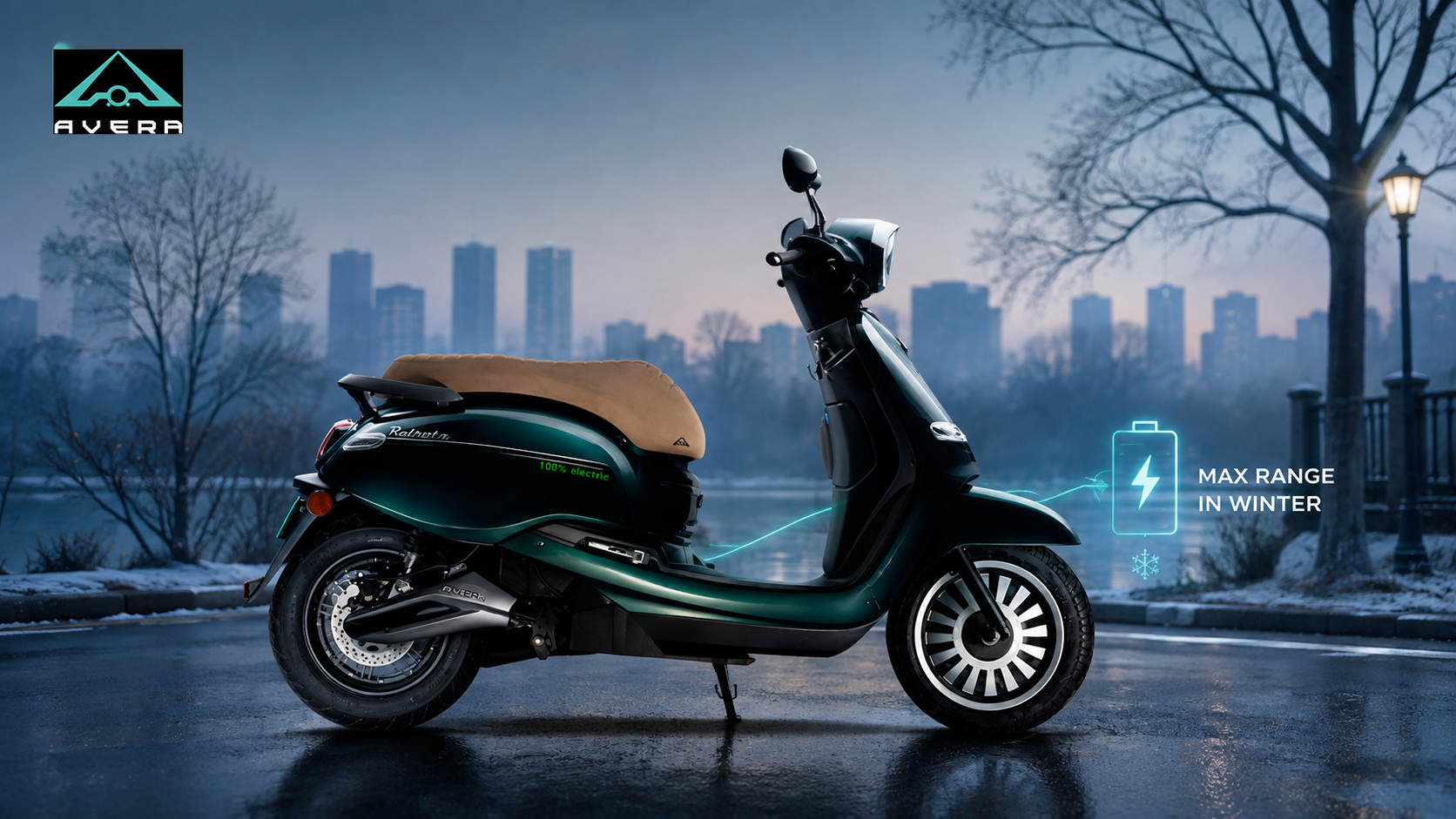
Winter can change the way an electric scooter battery delivers and receives energy. The practical impact varies by temperature, battery system, route, riding style, passenger load and charging routine. Riders should therefore focus on usable real-world range rather than relying only on a headline range figure.
Does Winter Affect Electric Scooter Range?
Yes, colder conditions can influence battery performance and energy availability. Electric scooters rely on electrochemical battery systems, and temperature can affect how efficiently those systems operate.
However, winter range should not be viewed as a single fixed percentage reduction for every electric scooter. The actual difference can vary depending on the battery chemistry, battery management system, ambient temperature, charging habits, road conditions and how the scooter is ridden.
This is why a practical buying and ownership approach should focus on your real daily kilometres, usable range and charging access rather than expecting the same result in every season.
1. Why Battery Performance Can Change in Cold Weather
An electric scooter battery stores and supplies electrical energy through chemical processes inside its cells. Lower temperatures can slow these processes and influence how easily the battery delivers power.
For riders, this can sometimes appear as a difference in available range, charging behaviour or performance compared with warmer conditions.
Battery performance should therefore be understood as the result of the entire system, including the cells, battery pack design, Battery Management System, charging strategy and vehicle integration.
2. Battery Chemistry Matters
Battery chemistry is an important part of an electric scooter's overall design.
AVERA highlights LFP, or lithium iron phosphate, battery-pack technology within its electric mobility ecosystem. LFP is widely valued for characteristics such as safety and cycle-life potential.
However, battery chemistry alone does not determine winter performance. The complete pack, BMS, temperature conditions, charging strategy and vehicle integration all contribute to everyday battery behaviour.
Battery Factors That Influence Real-World Range
- Battery chemistry
- Usable battery capacity
- Battery Management System
- Ambient temperature
- Charging conditions
- Vehicle load
- Road and riding conditions
3. Daily Kilometres Become Even More Important in Winter
If you know exactly how far you travel each day, seasonal changes in usable range are easier to manage.
Start by calculating:
- Your home-to-office or college distance
- Return journey
- Regular errands
- Number of riding days per week
- Passenger use
- Occasional extra kilometres
AVERA's broader buying guidance recommends understanding average daily kilometres, road type, passenger use and charging location before choosing an electric scooter.
4. Leave a Practical Range Margin
A rider whose daily travel uses almost the entire practical range of the scooter has less flexibility when conditions change.
This becomes especially important when dealing with winter weather, unexpected traffic, additional errands or longer routes.
Choose an electric scooter with enough usable range for your normal commute plus a reasonable margin instead of matching your daily distance exactly.
5. Traffic Still Plays a Major Role
Winter is only one factor affecting range. City traffic can influence energy use throughout the year.
Frequent stop-and-go riding changes how the motor uses energy. Repeated acceleration, braking and slow-moving traffic can produce a different range result compared with smooth, steady-speed travel.
Therefore, riders should not assume that a winter range difference is caused by temperature alone.
6. Road Conditions Can Influence Winter Range
Road quality affects the way an electric scooter is ridden. Rough roads, repeated speed breakers, slopes and uneven surfaces can cause frequent changes in acceleration and speed.
The type of road should therefore be considered when estimating usable range.
| Winter Riding Factor | Possible Influence | What Riders Should Do |
|---|---|---|
| Cold Temperature | May influence battery energy delivery | Plan using practical range |
| Heavy Traffic | Changes acceleration and braking patterns | Allow extra range margin |
| Rough Roads | Creates more speed changes | Maintain tyres and suspension |
| Slopes | Can increase motor demand | Consider route conditions |
| Passenger Load | Adds vehicle load | Include passenger use in range planning |
7. Passenger Load Can Affect Range
If you regularly travel with a passenger, the scooter has to move additional weight.
This can influence acceleration and energy use, especially on slopes or demanding roads.
Passenger use should therefore be included when estimating winter range rather than comparing only solo-riding figures.
8. Tyre Pressure Matters During Winter
Tyre condition and inflation influence rolling behaviour and overall riding efficiency.
Riders should regularly check tyre pressure according to the vehicle manufacturer's recommendations. Incorrect tyre pressure can affect handling, comfort and energy usage.
This simple maintenance step is useful throughout the year and can become particularly important when seasonal temperature changes occur.
9. Charging Behaviour Can Feel Different in Cold Conditions
Battery charging is another area where temperature can influence behaviour.
Owners should always follow the manufacturer's recommended charging procedure and use the authorised charging equipment supplied or approved for the vehicle.
Avoid making assumptions about charging time solely from another rider's experience because the battery, charger, temperature and electrical conditions may differ.
10. Home Charging Can Make Winter Ownership Easier
Reliable home charging can make seasonal range variation easier to manage because the rider knows where and when the scooter can be charged.
Before buying an electric scooter, identify your normal charging location and confirm that the electrical connection is suitable.
Apartment residents should also confirm charging permission, access, metering and safe charging arrangements before delivery.
Winter Charging Checklist
✓ Use authorised charging equipment
✓ Keep your regular charging location ready
✓ Follow manufacturer charging instructions
✓ Allow enough charging time before longer trips
✓ Maintain a practical battery reserve
11. Avoid Judging Range From One Journey
One unusually low or high range result does not necessarily represent the scooter's typical performance.
Traffic conditions, route length, road quality, passenger load and temperature may all have been different on that journey.
A better approach is to observe the scooter over multiple regular trips and understand the pattern under your actual usage conditions.
12. Should You Charge More Frequently in Winter?
Charging frequency should be based on your actual daily kilometres, remaining usable range and the manufacturer's recommended charging practices.
Riders with longer commutes may choose to charge more regularly so they have enough flexibility for unexpected journeys.
The goal should be dependable daily mobility rather than trying to use every possible kilometre before charging.
13. Keep the Scooter Properly Maintained
Winter range is not only about the battery. The complete scooter should be kept in good condition.
Check:
Maintain recommended pressure and condition.
Keep braking systems properly maintained.
Follow recommended charging and service guidance.
Follow the recommended service schedule.
14. Winter Range and Long-Distance Commuting
Riders with longer or irregular journeys should be especially careful when planning winter travel.
AVERA's general buying guidance recommends paying closer attention to real-world range, charging time, service availability and charging infrastructure when travel is longer or less predictable.
If your daily route already approaches the upper end of the scooter's practical range, make sure your charging plan provides enough flexibility for seasonal changes.
15. Winter Range and Total Cost of Ownership
Energy efficiency is only one part of electric scooter ownership.
A complete financial comparison should also consider purchase price, electricity, routine maintenance, insurance, financing, tyres, battery warranty and expected resale considerations.
AVERA's source guidance recommends using your own kilometres and local prices when calculating ownership economics rather than relying on generic savings claims.
16. Battery Warranty Is Important
Buyers should understand battery warranty and operating conditions before purchase.
Ask about:
- Battery warranty duration
- Applicable conditions
- Battery Management System support
- Recommended charging procedure
- Service requirements
- Warranty claim process
Choosing an AVERA Electric Scooter for Everyday Use
AVERA's electric scooter portfolio is positioned around different urban mobility requirements. Buyers should choose according to intended use, performance expectations, range requirement, budget and preferred features.
AVERA VINCERO
AVERA VINCERO is positioned for customers seeking a more performance-oriented electric two-wheeler experience.
AVERA RETROSA
AVERA RETROSA is positioned around a distinctive premium urban-scooter proposition.
RETROSA Lite e
RETROSA Lite e is positioned as an accessible option for customers entering electric mobility.
Exact specifications, range, pricing and availability may change, so always check current official product information before purchase.
Electric Scooter Winter Range Checklist
- Calculate your normal daily kilometres.
- Leave a practical range margin.
- Consider temperature and seasonal conditions.
- Consider traffic and road quality.
- Include passenger load in range planning.
- Maintain recommended tyre pressure.
- Use authorised charging equipment.
- Confirm reliable home or workplace charging.
- Follow recommended battery and service guidance.
- Monitor real-world range over several regular journeys.
Frequently Asked Questions
Does electric scooter range decrease in winter?
Cold temperatures can influence battery energy delivery, so some riders may notice differences in usable range. The actual effect varies by battery system, temperature and riding conditions.
Why does an EV battery behave differently in cold weather?
Battery cells depend on electrochemical processes that can behave differently at lower temperatures.
Does winter affect electric scooter charging?
Temperature can influence battery charging behaviour. Riders should follow the manufacturer's recommended charging procedure and use authorised charging equipment.
Should I charge my electric scooter more frequently in winter?
Charging frequency should depend on your daily kilometres, usable range and manufacturer recommendations. Maintaining a practical reserve can be useful for longer journeys.
Does passenger weight affect winter range?
Passenger load can influence energy consumption and should be considered together with temperature, roads and traffic.
Do tyres affect electric scooter range in winter?
Tyre pressure and condition influence rolling behaviour, handling and efficiency. Maintain tyre pressure according to the manufacturer's recommendations.
Does traffic affect winter EV range?
Yes. Stop-and-go traffic changes acceleration and braking patterns and can influence real-world energy consumption.
Should I trust the advertised range in winter?
Advertised or certified range is useful for comparison, but real-world range varies with temperature, traffic, load, road conditions and riding behaviour.
How can I improve winter electric scooter range?
Plan your journeys, maintain tyre pressure, follow recommended charging practices, keep the scooter properly serviced and allow a practical range margin.
Conclusion
Electric scooter range in winter should be understood as a real-world operating issue rather than a fixed number. Temperature can influence battery behaviour, but traffic, roads, passenger load, tyre condition and charging habits also play important roles.
The best approach is to understand your own daily kilometres, maintain enough practical range margin and follow the manufacturer's battery, charging and service guidance.
For buyers, this also reinforces an important rule: choose an electric scooter according to real usage conditions rather than relying only on the maximum range shown on a specification sheet.
About AVERA
AVERA is an electric two-wheeler manufacturer from Andhra Pradesh, India, focused on sustainable mobility, engineering and product development. The company is building capabilities across electric vehicle manufacturing, battery-pack integration and R&D.